- Formidable Function
- Posts
- LP/OP #15
LP/OP #15
IPB. Reconnaissance Pull. Indicators & Warnings.

Ryan DeQuiroz
March 19, 2026
Welcome back to the LP/OP friend.
This newsletter shares insights from the highly pragmatic military methodologies learned throughout my 20 years spent in the military and private sector.
We do so briefly and clearly with respect for your time to give you an edge over your competitors, adversaries, and enemies.
Every edition we cover new...
Tactics, Techniques, and Procedures (TTPs)
Inspirational Exemplars
This week, we cover three concepts that sharpen how you read the environment before you act:
Intelligence Preparation of the Battlefield, Reconnaissance Pull, and Indicators & Warnings.
These aren't just staff officer processes. They are the disciplines that separate people who react from people who anticipate. Anyone making decisions based on assumptions instead of observation needs to read this.
Tactic: Intelligence Preparation of the Battlefield (IPB)

Coalition force disposition and movement corridors, Operation Desert Storm (Wikimedia Commons)
Intelligence Preparation of the Battlefield is the military's systematic process for understanding the operating environment before committing forces. You study the terrain, the weather, the enemy's capabilities, their most likely courses of action, and the civilian landscape. You do this before the first order is given. Before the first boot crosses the line of departure.
Most people skip this entirely. They launch a business without studying the market's actual incentive structure. They take a job without understanding what the organization really rewards versus what it claims to reward. They enter a competitive space and start pushing without ever mapping the terrain they're pushing into.
In military doctrine, IPB has four steps: define the operational environment, describe the environment's effects, evaluate the threat, and determine threat courses of action. In your career, business, or any competitive context, this translates directly. What system am I operating in? What does this system actually reward? Who are the key players and what are they optimizing for? What are they most likely to do next?
The person who skips IPB commits forces blind. They work hard in the wrong direction. They build capabilities the system doesn't value. They fight battles that didn't need fighting. The person who runs IPB first knows where effort has leverage and where it evaporates.
When was the last time you systematically studied the environment you operate in before making your next move?
STOP GUESSING AT THE TERRAIN. MAP IT BEFORE YOU MOVE.
Technique: Reconnaissance Pull
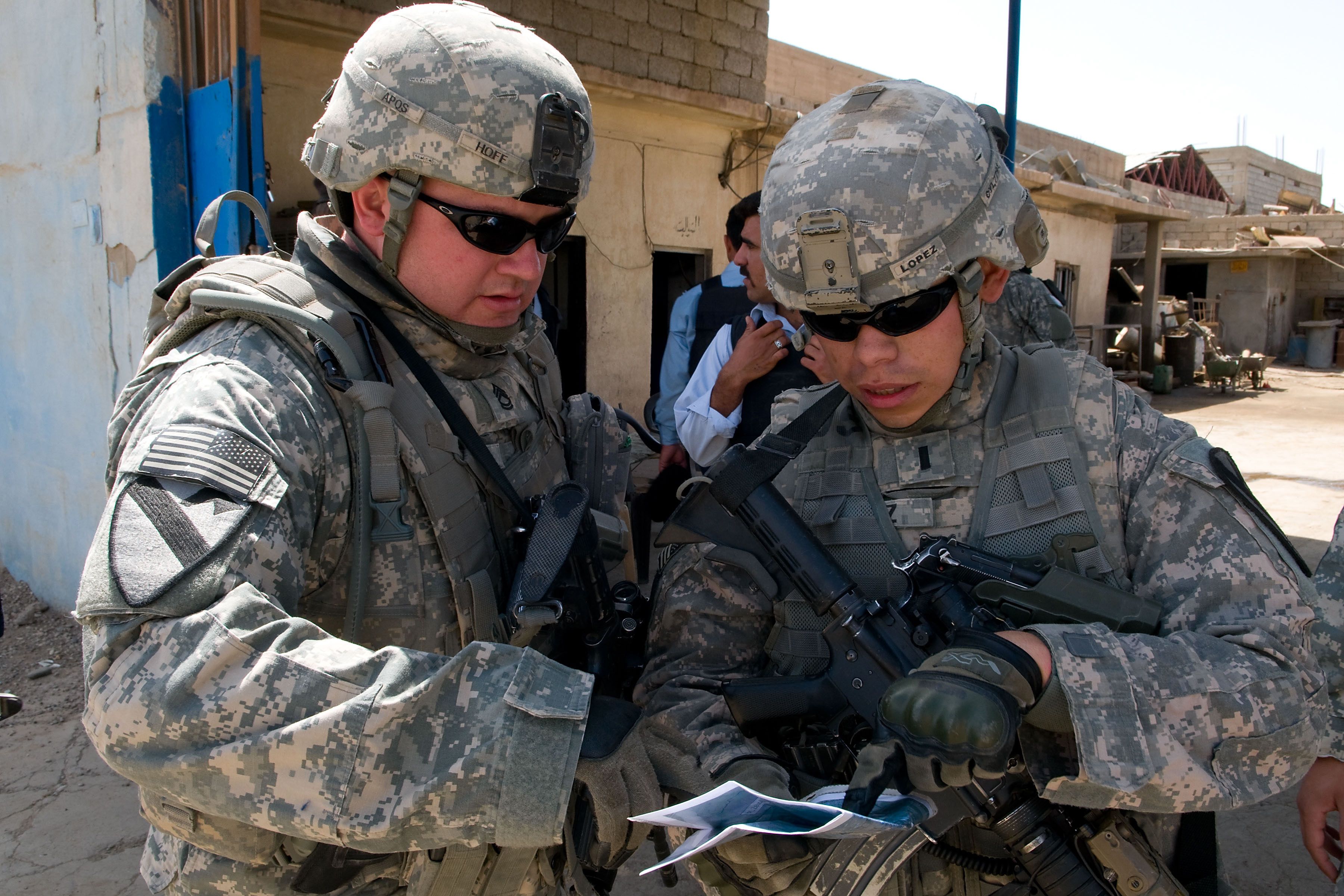
Cavalry scouts review their map during a reconnaissance patrol, Kirkuk, Iraq, 2009 (U.S. Army)
Reconnaissance pull is the opposite of how most operations are planned. The conventional approach is reconnaissance push. The commander draws up a plan, decides on a route, and sends scouts ahead to confirm the plan will work. The plan drives the movement. The scouts serve the plan.
Reconnaissance pull flips this. You send small elements forward to probe the environment. They report back what they find. The main body then moves toward the opportunity the recon elements discovered. The environment drives the movement. The scouts lead.
This is how complex systems actually work. You cannot plan your way through uncertainty from behind a desk. The manuscript you wrote doesn't survive first contact with the market. The five-year career plan doesn't survive the first reorganization. The business model doesn't survive the first hundred customers.
Reconnaissance pull says: send small, cheap probes into the environment. Test an offer with ten people before building the full product. Have three conversations with insiders before accepting the job. Run a small campaign before committing the full budget. Let the results of those probes pull your main effort toward where opportunity actually exists.
The difference between recon push and recon pull is the difference between forcing reality to match your plan and adjusting your plan to match reality. Complex systems punish the first approach and reward the second.
Where are you pushing a plan that the environment has already told you won't work?
LET THE TERRAIN PULL YOU FORWARD. STOP DRAGGING YOUR PLAN THROUGH IT.
Procedure: Indicators & Warnings (I&W)

NORAD Space Defense Operations Center: an analyst monitors tracking screens, 1983 (Dept. of Defense)
Indicators and Warnings is the intelligence community's discipline for detecting what is about to happen based on observable patterns rather than predictions or theories. You don't wait for the enemy to attack. You identify the behavioral signatures that precede an attack and watch for them systematically.
A logistics buildup in a staging area. Increased communication traffic between command nodes. Unusual troop rotations near a border. None of these are an attack. All of them indicate one is coming. The analyst who tracks these patterns sees the future before it arrives. The analyst who waits for confirmation sees it too late.
This is empiricism at the operational level. You trust observed behavioral patterns over theoretical predictions. You trust what the system is doing over what anyone says it is doing. The organization says it values innovation but quietly defunds every risky project. That's an indicator. Your biggest client stops returning calls promptly and starts asking for detailed pricing breakdowns. That's a warning. Your industry's top talent starts leaving for adjacent sectors. That's a pattern worth tracking.
I&W requires building a collection plan. You decide in advance what signals matter, then you watch for them deliberately. You don't passively absorb information and hope insight emerges. You define what you need to observe, then you observe it with discipline.
Most people operate without a collection plan. They react to events after they happen instead of detecting the patterns that produce those events. They get surprised by layoffs, market shifts, and competitor moves that were telegraphed months in advance through observable indicators.
What indicators are you tracking right now? If the answer is none, you are operating blind.
THE PATTERN IS ALWAYS THERE BEFORE THE EVENT. YOUR JOB IS TO SEE IT FIRST.
Inspirational Exemplar: Schwarzkopf and the Left Hook in Desert Storm
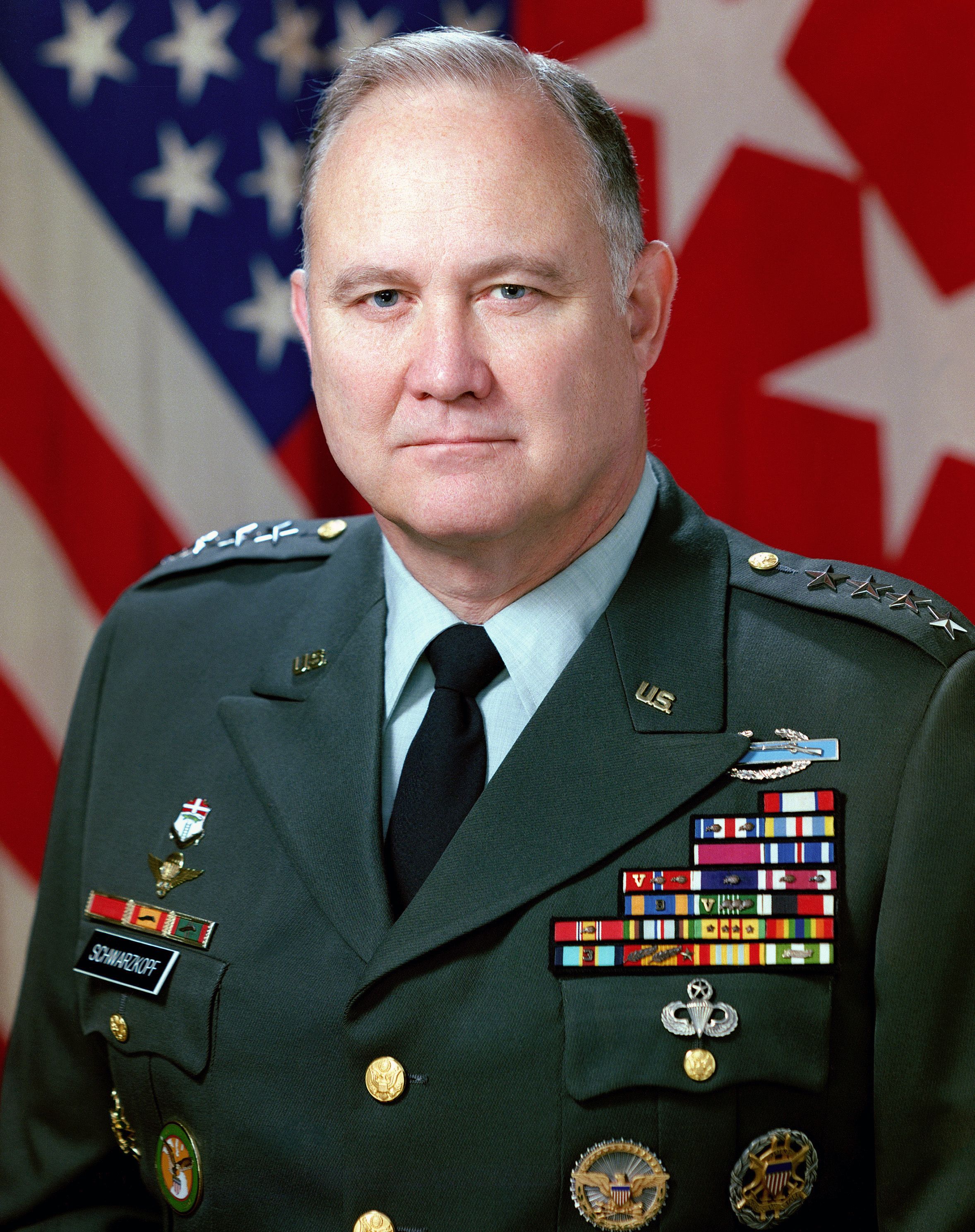
General Norman Schwarzkopf, CENTCOM Commander, Operation Desert Storm (U.S. Army)
August 1990. Saddam Hussein invades Kuwait and positions the fourth-largest army in the world along the Saudi border. Coalition forces face a heavily fortified Iraqi defensive line stretching across the Kuwaiti frontier: minefields, tank ditches, berms, and entrenched divisions. A frontal assault would be a meat grinder. General Norman Schwarzkopf has a different idea.
Schwarzkopf runs one of the most thorough IPB operations in modern military history. His intelligence staff maps every Iraqi unit, every defensive position, every supply line. They study the terrain west of the Iraqi lines where the desert appears impassable. They evaluate Iraqi command structure, communication patterns, and logistics vulnerabilities. They determine that the Iraqis have anchored their entire defense on the assumption that any attack will come head-on through Kuwait.
So Schwarzkopf sends recon elements probing along the western flank. Special operations teams and cavalry scouts push deep into the desert, testing routes the Iraqis assumed were unusable. They find what he needs: passable terrain for an entire corps to swing wide and hit the Republican Guard from a direction they never prepared to defend. The reconnaissance pulls the plan westward. The environment shapes the operation, not the other way around.
Meanwhile, coalition intelligence tracks every indicator of Iraqi readiness. They monitor communication patterns between Baghdad and field commanders. They watch logistics convoys, troop rotations, and air defense activity. Every observable behavior feeds the collection plan. When the air campaign begins, the indicators confirm what Schwarzkopf needs to know: Iraqi forces in the west are blind, undersupplied, and unable to reposition. The warnings all point in one direction. The left hook will work.
The ground war lasts 100 hours. VII Corps executes the massive left hook, sweeping hundreds of miles through the western desert and slamming into the Republican Guard's exposed flank. The Iraqis never see it coming. Their fortified frontline becomes irrelevant. Schwarzkopf doesn't attack where the enemy is strongest. He maps the battlefield, lets reconnaissance reveal the opportunity, reads the indicators that confirm the opening, and commits decisive force where resistance is weakest.
Formidable operators don't outmuscle their environment. They out-read it.
Outbrief
The formidable don't win by working harder. They win by seeing clearer.
This week we covered three ways to sharpen your observation before you commit:
Intelligence Preparation of the Battlefield: study the system before you enter it.
Reconnaissance Pull: let small probes reveal opportunity instead of forcing a predetermined plan.
Indicators & Warnings: track the behavioral patterns that precede events, not the events themselves.
And from Schwarzkopf in the desert, the ultimate lesson: the general who sees the battlefield clearly defeats the one who merely occupies it.
Stop reacting. Start observing.
Until next time, stay formidable.
*For more resources, services, and ways to connect — check out everything I have going on here
**And if you're looking for a practical tool to keep your notes, plans, and strategies sharp and organized, I recommend picking up the Lockebook - a minimalist, military-inspired notebook designed to streamline your thinking and keep your goals front and center.
Thank you very much for reading.
Genuinely,
Ryan "DQ" DeQuiroz
Reply